How the House of Savoy Shaped the Grissino
In the elegant cafes of Turin, located beneath the city’s long porticoes, you will often find a tall glass or a paper sleeve filled with long, golden, uneven spears of bread. These are grissini—Italian breadsticks. Although they have become a global staple of Italian dining, their origin is not just a culinary accident; it is a story of royal necessity, medical ingenuity, and the enduring legacy of the House of Savoy.
If you enjoy real Italian food, you’ve likely savored these crispy breadsticks at the beginning of a meal. In Piedmont, they are particularly popular for their crunchy texture, making them a favorite accompaniment to any meal, snack, or aperitif.
What many people don’t realize is that Italian breadsticks (even though Italy wasn’t unified yet) were among the perks that helped the House of Savoy gain power and expand its territory, ultimately earning it the title of Royal Family.
A Key Figure in the House of Savoy’s History
The story of the House of Savoy & Italian Breadsticks in Turin begins in the late 17th century with a young Victor Amadeus II, the future Duke of Savoy and eventually the first King of the dynasty.
The young prince inherited the title of duke following his father’s death. His French mother reigned with rather domineering tendencies until her son grew up and displayed a strong character and sensitive intelligence.
In fact, during the first quarter of the 1700s, he had to engage in the significant political, diplomatic, and military events of that era. After a few years of eating Italian breadsticks, he faced the French troops, who had besieged Turin for days. The young duke ultimately defeated France and was crowned King of Sicily with great pomp in 1713, a title that was exchanged for that of Sardinia in 1720.

How Breasticks Were Invented in Turin
As a child, Prince Victor Amadeus II was frail and suffered from chronic digestive issues, struggling to digest the soft, doughy center (the mollica) of traditional breads. These often harbored bacteria or remained underbaked, causing him significant pain.
Desperate to see the heir to the throne thrive, the court physician, Dr. Teobaldo Pecchio, theorized that the prince needed a bread that was baked through entirely—something crisp, dry, and free of the moist interior that plagued his digestion.
In 1679, Dr. Pecchio turned to the court baker, Antonio Brunero, with a specific challenge: create a bread that was “all crust.”
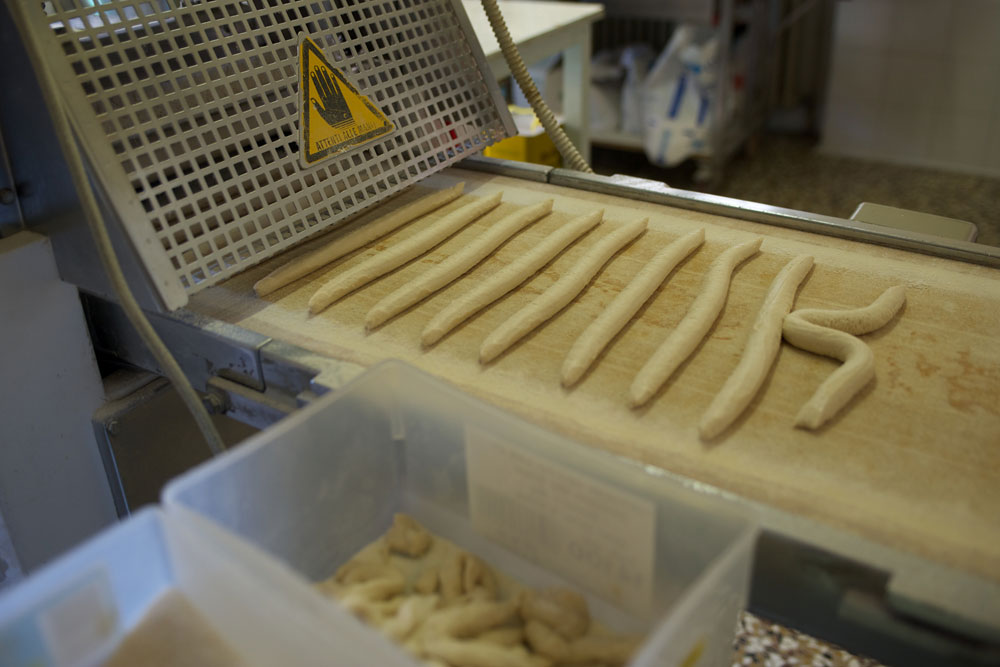
Brunero took the dough for traditional Piedmontese ghersa bread and stretched it into thin, elongated strips. By stretching the dough so thin, the oven heat evaporated all the moisture, resulting in a brittle, crunchy stick. This new creation was dubbed the grissino (the diminutive of ghersina).
The experiment was a triumph. The young prince could digest the bread easily, his health improved, and the House of Savoy found itself with a new culinary icon.
Previously Recorded History of Breadsticks
Another theory—better described as a legend—suggests that Brunero may not deserve all the credit he receives for the invention of breadsticks. In 1643, a travel diary written by a Florentine abbot, Vincenzo Rucellai, noted the existence of a new “extravagant” bread that was described as “long as an arm and very thin.” This bread was reported in Chivasso, a town just outside of Turin.
From this, we can infer that Brunero’s creation was likely a variation of an already existing delicacy. The House of Savoy was among the first enthusiasts of this specialty.

From Turin to Europe, the House of Savoy Culinary Legacy
The fame of the Piedmontese breadstick eventually spread across Turin and Europe. Napoleon Bonaparte was famously obsessed with them, referring to them as “les petits bâtons de Turin” (the little batons of Turin). He even established a regular courier service to ensure that fresh grissini were delivered from Piedmont to his court in Paris.
Even the philosopher Friedrich Nietzsche, during his time living in Turin, remarked on the local population’s fondness for these crunchy sticks, though he famously remained a fan of traditional rolls!
Many heirs of Victor Amadeus II were known to enjoy breadsticks almost everywhere, even during theatrical performances. Notably, Charles Felice (1775-1831) and Charles Emanuel III were particularly fond of them. The latter even had a large container specially made to hold and transport these delicate treats during his honeymoon in 1724.
The House of Savoy & Italian Breadsticks are perfectly embodied in the city of Turin: disciplined, elegant, and understated. It stands in stark contrast to the flamboyant softness of Neapolitan pizza or the heavy richness of Roman pasta. Instead, it presents a refined, mathematical precision—a bread born from a doctor’s prescription and crafted by a skilled baker.
So, the next time you break a breadstick in a restaurant, remember that you aren’t just enjoying an appetizer; you are engaging in a 300-year-old royal tradition that played a pivotal role in sustaining a dynasty. Embrace this connection to history with every bite.
The House of Savoy & Italian Breadsticks: Turin and Piedmont’s Food
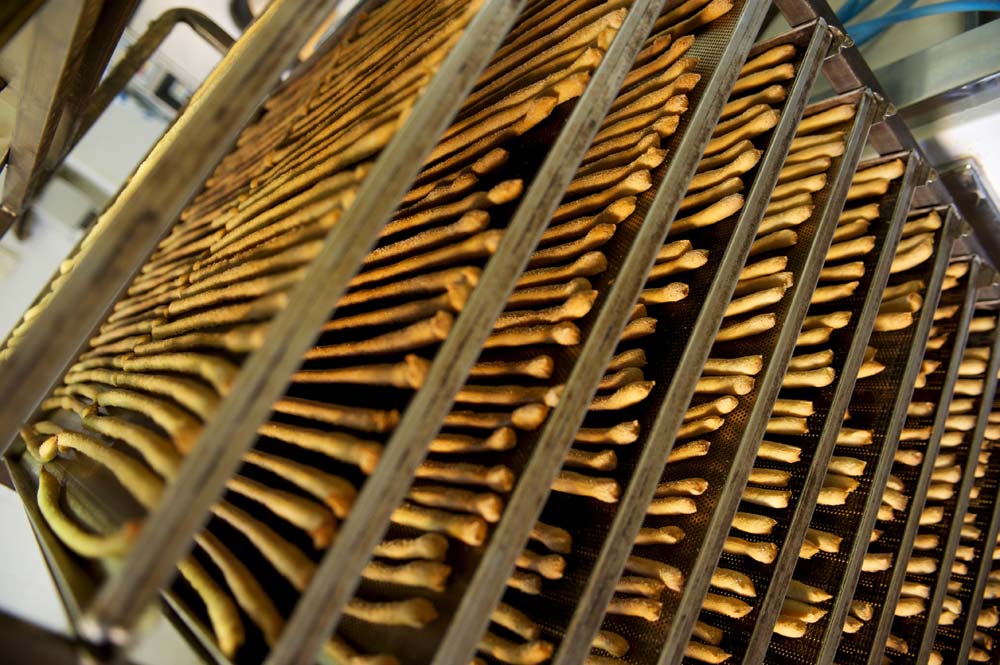
Breadsticks are one of Piedmont’s signature products, commonly found in bakeries and served on restaurant tables.
There are two main traditional styles you will find when searching for real Italian food in the Piedmont region.
The robatà, or rabatà, is the oldest style of breadsticks, meaning “rolled” in the local dialect. These breadsticks are hand-rolled, knobby, and dense, just like Prince Vittorio Amedeo II probably ate in the late 1600s. Made with the same dough as bread, these breasticks are quite hard and, outside Turin, less popular.
In Alba, Asti, and on the Langhe Hills, it is more common to find the stirati, or “stretched” version. Their lighter, crispier texture comes from adding olive oil to the recipe, which creates a more elastic, tastier dough. Their invention can be traced back to a more recent time, when olive oil became a staple and readily available ingredient in the hills of Piedmont.
Best Ways to Savor Italian Breadsticks in Turin and Piedmont
Grissini can be enjoyed as a snack, alongside an aperitif, or with a glass of wine. During traditional meals, breadsticks make excellent accompaniments to starters and are appreciated for their lighter texture compared to regular bread loaves. Some pastry shops even sell them coated in dark chocolate, making them a delightful option for a sweet treat.
One of our favorite places to visit is the Cravero bakery in Barolo, where breadsticks are baked in an oven located next door to the shop. Situated halfway along the main street of this small village, the fragrant smell from Cravero’s bakery often wafts toward the imposing medieval castle nearby.
In Piedmont, we often judge a restaurant by the quality of its breadsticks, preferably served beautifully on the table and wrapped in a linen napkin. While individually wrapped grissini are convenient for packing in a backpack, diners expect to find artisanal breadsticks from local bakeries, or directly crafted by the restaurant’s bakers, as often happens in the Michelin-Starred Restaurants in Piedmont.
These versatile breadsticks can be enjoyed by wrapping a slice of ham around them or dipping them into a creamy sauce, such as a gourmet truffle spread or pesto. Additionally, some soups include crumbled grissini mixed with broth.
In the past, small fried pancakes were made using crushed grissini, eggs, and milk.